Credits: Becky Marvil, Nina Henry, Tony Hepburn, Gerlinde Taurer, Roselyn Pierce, Tom Shelley, Bruce Hallett; Xeno Canto for range map & sound file
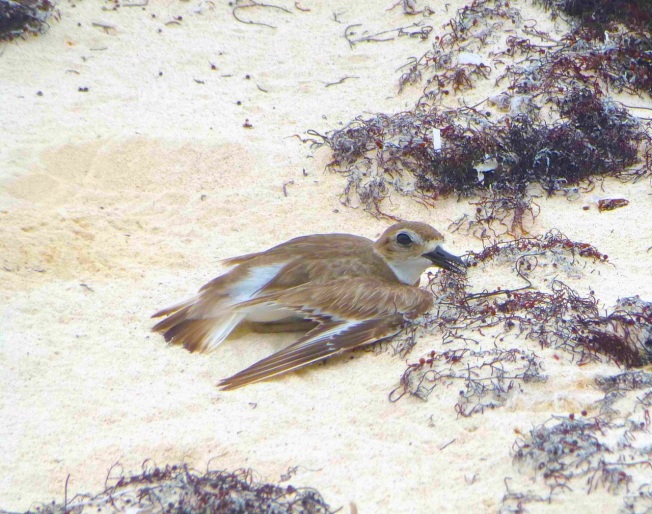
WILSON’S PLOVER Ochthodromus wilsonia PR B 2


‘Broken Wing Display’ to distract predators from a nesting area
BLACK-BELLIED PLOVER Pluvialis squatarola WR 1 (Intermediate Plumage)
AMERICAN GOLDEN PLOVER Pluvialis dominica TR 4
SEMIPALMATED PLOVER Charadrius semipalmatus WR 2
KILLDEER Charadrius vociferus WR 2
PIPING PLOVER Charadrius melodus WR 3

Photo credits: Sandy Walker, Craig Nash, Tom Sheley, Clare Latimer, Tony Hepburn, Bruce Hallett, Tom Reed

There are 8 gull species recorded on Abaco. The 5 species shown here all feature in the new ‘DELPHI CLUB GUIDE TO THE BIRDS OF ABACO’. The others are the occasional vagrants Black-legged Kittiwake and Black-headed Gull; and the rare winter visitor Great Black-backed Gull. We do in fact have a Black-headed Gull in the archive (in winter plumage), but it was taken on New Providence and wasn’t eligible for inclusion in a book of Abaco birds. Even as a cheat.
Black-headed Gull (winter plumage) NP![Black-headed Gull (adult, winter plumage) [Woody Bracey] Black-headed Gull (adult, winter plumage) WB](https://rollingharbour.files.wordpress.com/2014/03/black-headed-gull-adult-winter-plumage-wb-p1001028-copy-2.jpg?w=300)
HERRING GULL (& header image) (WR 2)

LESSER BLACK-BACKED GULL (WR 2)

Photo Credits: Bruce Hallett, Woody Bracey, Nina Henry, RH
Abaco is fortunate to be home to 4 of the 5 endemic Bahamas species. The fifth, the beautiful BAHAMA ORIOLE Icterus northropi, was found on both Abaco and Andros until the 1990s, when it sadly became extirpated from Abaco. Now found only on Andros, there are thought to be fewer than 300 Orioles left – a barely sustainable number. The species is unsurprisingly IUCN listed as critically endangered. Here’s a picture of one as a reminder of what Abaco is now missing…
Abaco’s four endemic species are the tiny Bahama Woodstar hummingbird, the Bahama Yellowthroat, the Bahama Warbler (since 2011), and the Bahama Swallow. All are of course permanent breeding residents on Abaco and its outer Cays. None is exclusive to Abaco; all are relatively plentiful. The Woodstar is perhaps the hardest to find, not least because it competes territorially with the Cuban Emerald hummingbird. Even Woodstars can be found easily in some areas – Man-o-War Cay is a good place for them, for example. Here are some striking images of these four endemic bird species taken from the archives for “The Birds of Abaco” published last month.
BAHAMA WOODSTAR Calliphlox evelynae
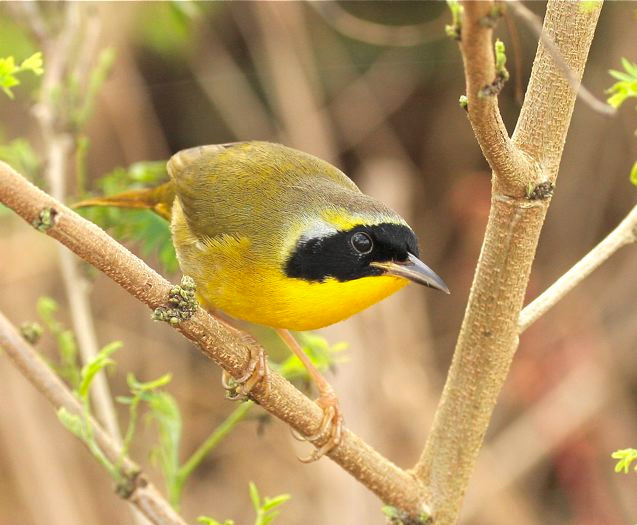
BAHAMA YELLOWTHROAT Geothlypis rostrata
BAHAMA WARBLER Setophaga flavescens
BAHAMA SWALLOW Tachycineta cyaneoviridis
“The Delphi Club Guide to the Birds of Abaco” was published as limited edition of 500 and has only been for sale for 8 weeks or so exclusively through the Delphi Club. Yesterday, we passed a happy milestone in that short time as the 250th copy was sold. Complimentary copies have also been donated to every school and relevant education department on Abaco to tie in with the excellent policy of teaching children from an early age the value of the natural world around them, the importance of its ecology, and the need for its conservation. The cover bird for the book was easy to choose – it just had to be a male Woodstar in all his glory with his splendid purple ‘gorget’.
Image credits as shown; otherwise, ‘cover bird’ by Tom Sheley, Bahama Oriole from Wiki

Summer is icumen in, that’s for sure. Has already cumen in, to be accurate. The approach of summer is the time when cuckoos tend to sing loudly (not lewdly, as the old lingo might suggest). The YELLOW-BILLED CUCKOO, recently featured, is one. The MANGROVE CUCKOO (Coccyzus minor) is another. Before I get on to some gorgeous pictures (none taken by me!), let’s have a sample of how this species sounds. The call has been described in various ways, for example as “gawk gawk gawk gawk gauk gauk”. I’m not so sure. And I can’t think of a sensible way to write it out phonetically. So I won’t. Please try, via the comment box…
Jesse Fagan / Xeno-Canto
Cornell Lab / Allaboutbirds
You will notice that all three birds above have got fat insects in their beaks. A lot of photos in the archive show feeding mangrove cuckoos. Maybe that’s when they are most likely to break cover, for they are quite a shy species. Their preference is for caterpillars and grasshoppers, but they are happy to eat other insects, spiders, snails, lizards and (with a nod to an all-round healthy diet) fruit.
Delphi is lucky to have some of these handsome birds lurking in dense foliage along the drives – the guest drive in particular. Some of these photographs were taken there. Occasionally you may see one flying across a track ahead of a vehicle, flashing its distinctive tail. It’s significant that only the last of these photos shows the bird right out in the open – the rest are all deeper in the coppice.

Credits: Bruce Hallett, Alex Hughes, Tom Sheley, Gerlinde Taurer and the late Tony Hepburn; Audio – Xeno-Canto & Cornell Lab. All photos taken on Abaco!

A total of 12 tern species have been recorded on Abaco and in Abaco waters. Ever. Some are permanently resident, some are winter visitors, some arrive for the summer and one or two – for example the Arctic Tern – are one-off or vanishingly rare sightings. A few are commonplace, some you may see if you know where to look or are lucky, some would not be worth making a special trip to Abaco to find…
Here are 7 tern species that all feature in the newly published “Delphi Club Guide to the Birds of Abaco”. A cunning code devised by Bahamas ornithologist Tony White tells you when they are around (PR, WR, SR = permanent, winter, summer resident; TR means transient) and the likelihood of seeing one at the appropriate time (1 = very likely to 5 = next to no chance). B means ‘breeds on Abaco’.
The header picture shows a line up of Royal Terns perched characteristically facing the breeze on a dead tree far out on the Marls. I took it while we were out bonefishing, and our guide Ishi very tolerantly poled nearer to the birds so I could get a better shot at them with the sun behind me. The ones shown are in an intermediate stage between non-breeding plumage and full breeding plumage, when the ‘caps’ are black. One (shown below) had the full black cap.
BRIDLED TERN (SR B 2)
The other 5 species recorded are: Sooty Tern, Black tern, Common Tern, Arctic Tern and Forster’s Tern
Photo Credits: Bruce Hallett, Woody Bracey, Alex Hughes, RH
by
Published 1 March 2014 by Delphi Club Publications
Apologies to anyone who has strayed onto this new-born site. The hard hats are on and work is under way. Why not take a peek at the nine birds below while you are here!