
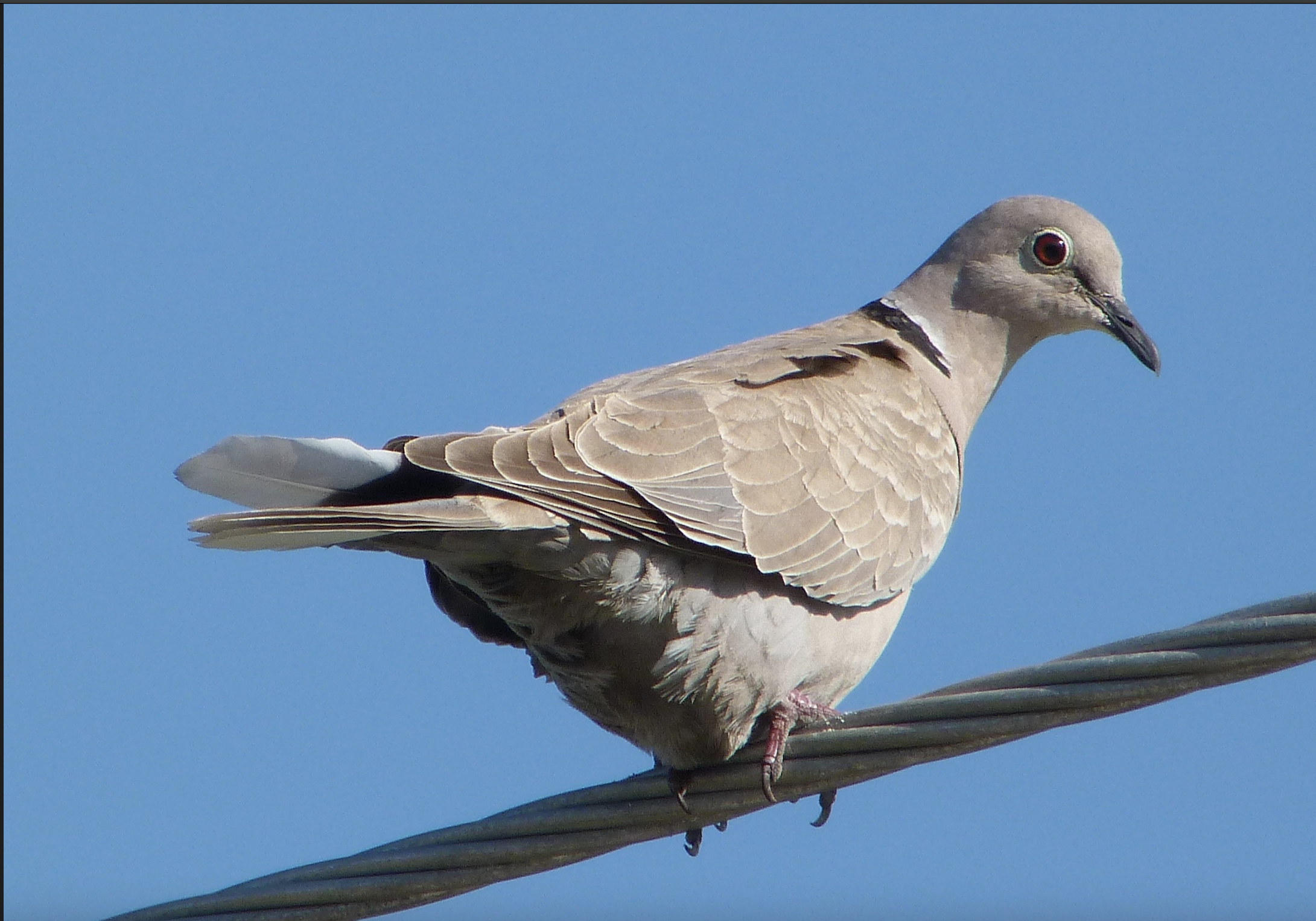

COLLARED DOVE . Streptopelia decaocto


Photo credits: Tom Sheley
‘BAHAMA DUCK‘ Anas bahamensis


Photos taken on Abaco by Gerlinde Taurer, a major contributor to “Birds of Abaco”

The Black-and-White Warbler Mniotilta varia is a fairly common winter resident on Abaco. They are the only birds of the genus Mniotilta (“moss-picker” gr.). Unlike most warblers these birds behave rather like nuthatches, creeping along the trunks and branches of trees grubbing insects out of the bark. Pine trees are ideal for this. A lot of the 37 species of warbler on Abaco are small and yellow. But as soon as I saw one of these for the first time, I was very relieved. I knew exactly what it was – the bird that has been described as ‘a flying humbug’.


Finally, this is a great short video of this little bird in action. Even if you only watch the first 30 seconds, you will be enchanted…
Image Credits: Bruce Hallett, Tom Shelley, Tom Reed. All are contributors to “The Delphi Club Guide to the Birds of Abaco” (Publ. March 2014)
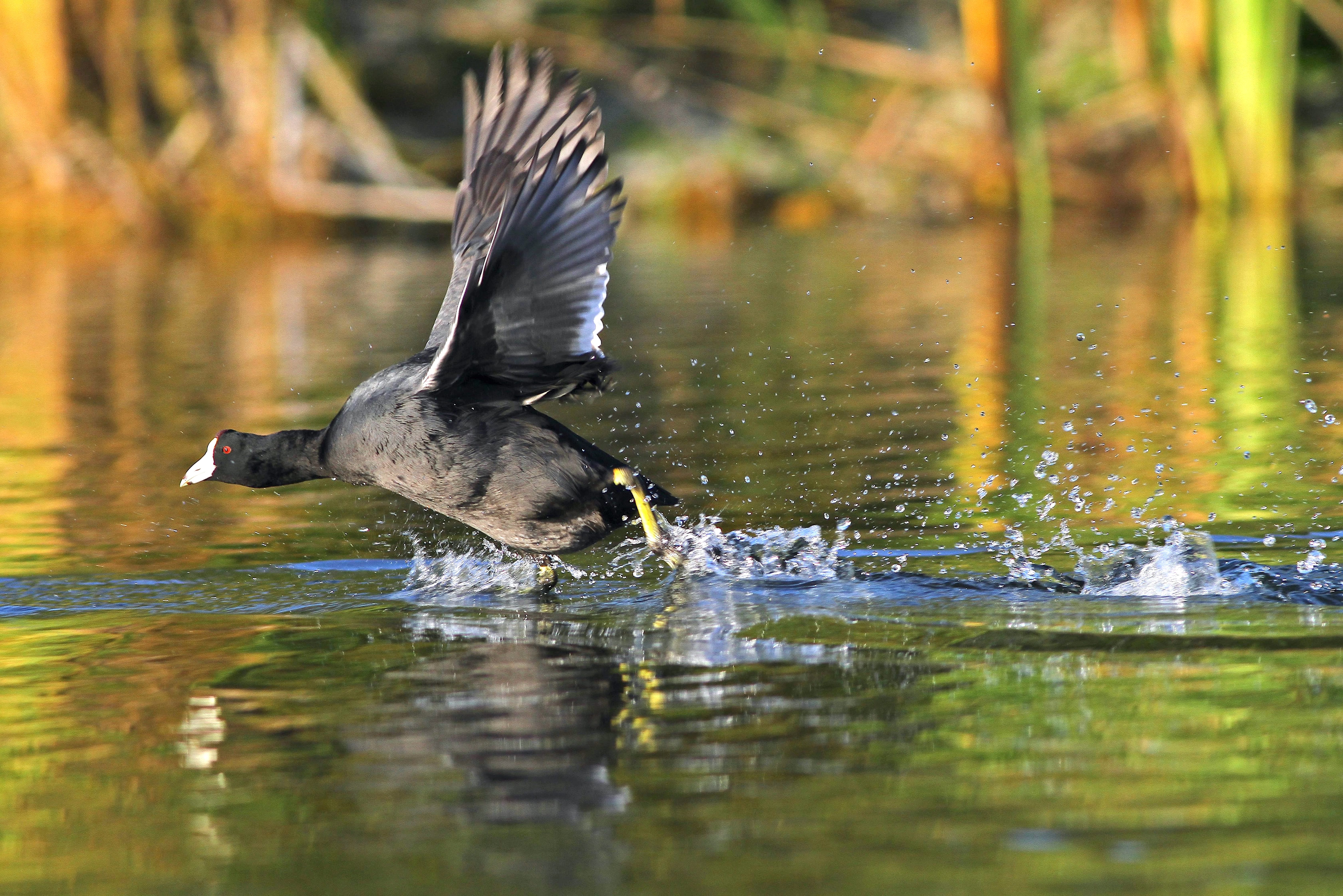
Coots and gallinules (moorhens) tend to get overlooked as birds of interest, being familiar to all and far from unusual in many locations. However, it is hard to imagine a more dramatic waterfowl image than this coot on the point of lift-off. Gerlinde Taurer, a significant contributor to BIRDS OF ABACO, captured this moment – a split second with the bird’s wings raised and the frantic paddle as the bird takes off.


The Tricolored Heron Egretta tricolor is one of 6 heron species found on Abaco, and is a permanent breeding resident. To which can be added 4 sorts of egret to complete a line up of expert fishers, all equally at home hunting in the water or from the shore, or surveying the scene from nearby vantage points like bushes and trees. A long neck, a long bill and long legs make this heron species ideally adapted for wading. Like other herons and egrets, it will stand stock-still waiting for the perfect fish to swim into range. However they are also active hunters, and will stalk prey or chase it by striding quickly through the water in pursuit. They eat fish, crustaceans, reptiles, and insects.


The heron and egret species of Abaco


Breeding plumage: smart blue bill and a fish to put in it
Credits: Phil Lanoue (1, 7); Dan Pancamo (2); Keith Salvesen (3); Woody Bracey (4); Bruce Hallett (5)
Abaco has two permanently resident woodpecker species, the WEST INDIAN WOODPECKER and the HAIRY WOODPECKER. There is a third, migratory woodpecker species that is a fairly common winter resident, the yellow-bellied sapsucker Sphyrapicus varius.
Like its woodpecker cousins, the sapsucker drills holes in trees (see below). The dual purpose is to release the sap, which it eats, and to attract insects that it also eats. A two-course meal, if you like. They’ll also eat insects on an undrilled tree, and even ‘hawk’ for them in flight. They balance their diet with fruit and berries.


The distinctive patterns of sapsucker holes may completely encircle the trunk of a tree with almost mathematical precision. This is sometimes described as ‘girdling’ and may have a damaging effect on a tree, sometimes even killing it if the bark is severely harmed. This may require preventive measures in orchards for example, though note that in the US Yellow-bellied Sapsuckers are listed and protected under the Migratory Bird Treaty Act so radical action is prohibited.

YELLOW-BELLIED SAPSUCKER SOUNDS
DRUMMING (Xeno-Canto / Richard Hoyer)
CALL (Xeno-Canto / Jonathon Jogsma)
On Abaco, palms are a favourite tree for the sapsuckers. There are several palms along the beach at Delphi. Below is a coconut palm that had seen plenty of sapsucker action, with the drill holes girdling the entire trunk from top to bottom.


In their breeding grounds yellow-bellied sapsuckers excavate a large cavity in a softwood tree as a nest. They mate for life, and often return to the same nest year every year, with the pair sharing nesting duties. I have no idea whether the pair migrate south for the winter together, or whether they agree to take a break from each other. I’d like to think it’s the former…

Credits: Photos Gerlinde Taurer, Tom Sheley, RH; Cornell Lab (Range Map) & Xeno-Canto (YBS recordings as credited above)
Species featured in ‘Guide to the Birds of Abaco’ by Keith Salvesen, pp 242-3

Four principal so-called ‘tyrant flycatchers’ (Tyrannidae) are found on Abaco: the loggerhead kingbird, the gray kingbird, the La Sagra’s flycatcher and the Cuban pewee. These are common permanent residents, except for the gray kingbird which is a summer resident only. Several other flycatcher species are found on Abaco, but they are very uncommon winter residents, rare transients, or vagrants.


Loggerheads seem to have two methods of observing humans and their mysteries. One is by perching on a branch or in a shrub, watching intently. They stay quite still… until suddenly launching into the air to intercept some passing insect with their hooked beaks (so-called ‘hawking’), before returning to their perch. And staring at you again. The other method is to follow you round, either flying slightly ahead as you progress; or fluttering in the coppice alongside you; or playing catch-up from behind.

A typical quizzical loggerhead sideways look… all flycatchers do this
The collective names for a group of kingbirds are: a Court, a Coronation, or a Tyranny

Photo Credits: Keith Salvesen at Sandy Point, Abaco Bahamas


 THE BIRDS OF ABACO