
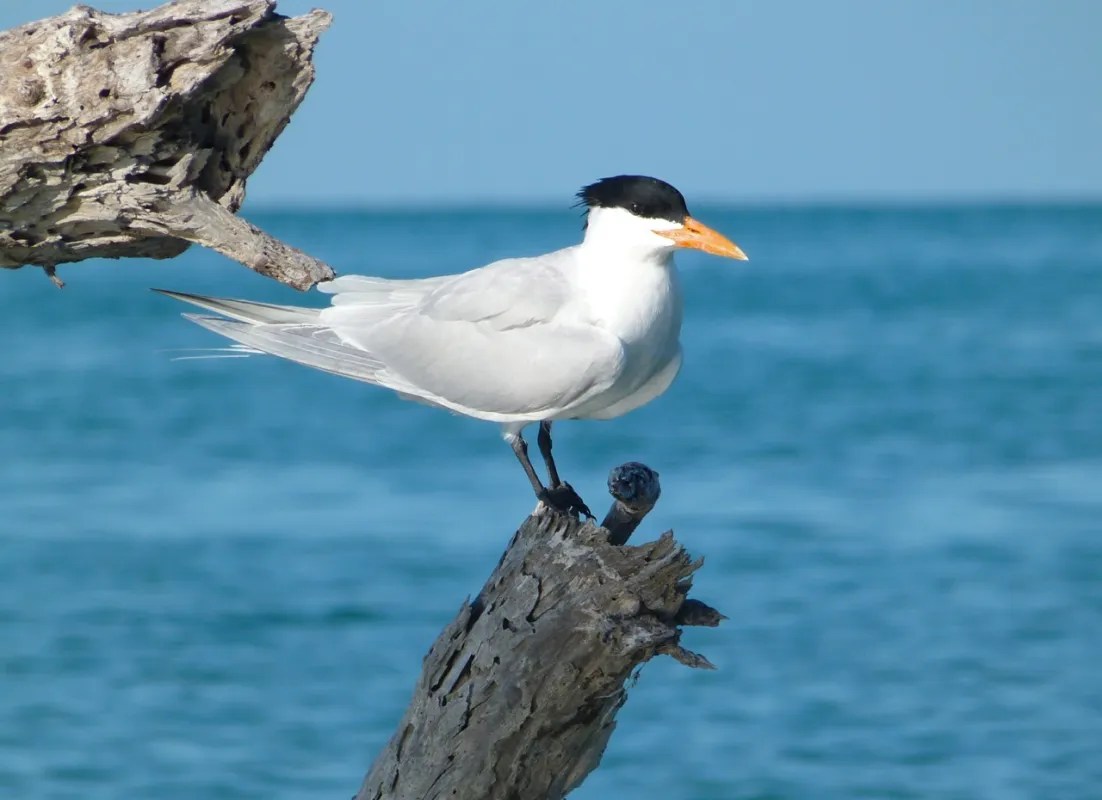

ROYAL TERN

There are twelve species of tern – ‘swallows of the sea’ – that to a greater or lesser extent may be found on Abaco. Whether they will actually be visible at any given time is less certain, though. For a start, the only resident species is the lovely Royal Tern, available at many locations on Abaco and the cays throughout the year. The rest are migratory or just passing through.

PERMANENT RESIDENTS
ROYAL TERNS Thalasseus maximus PR1


MIGRATORY TERNS: SUMMER
In the slightly less commonly-found category are the summer migrant terns that, by definition, are only in residence for around half the year. Four of these are fairly common in certain areas, and actually breed on Abaco; these include arguably the prettiest of all, the bridled tern. The other two tern species (gull-billed and sandwich) are more rare and as far as I can make out do not breed locally; or perhaps only rarely.
LEAST TERN Sternula antillarum SR B 1


BRIDLED TERN Onychoprion anaethetus SR B 2


ROSEATE TERN Sterna Dougallii SR B 2

SOOTY TERN Onychoprion anaethetus SR B 2

GULL-BILLED TERN Gelochelidon nilotica SR 3


SANDWICH TERN Thalasseus sandvicensis SR 4


MIGRATORY TERNS: WINTER
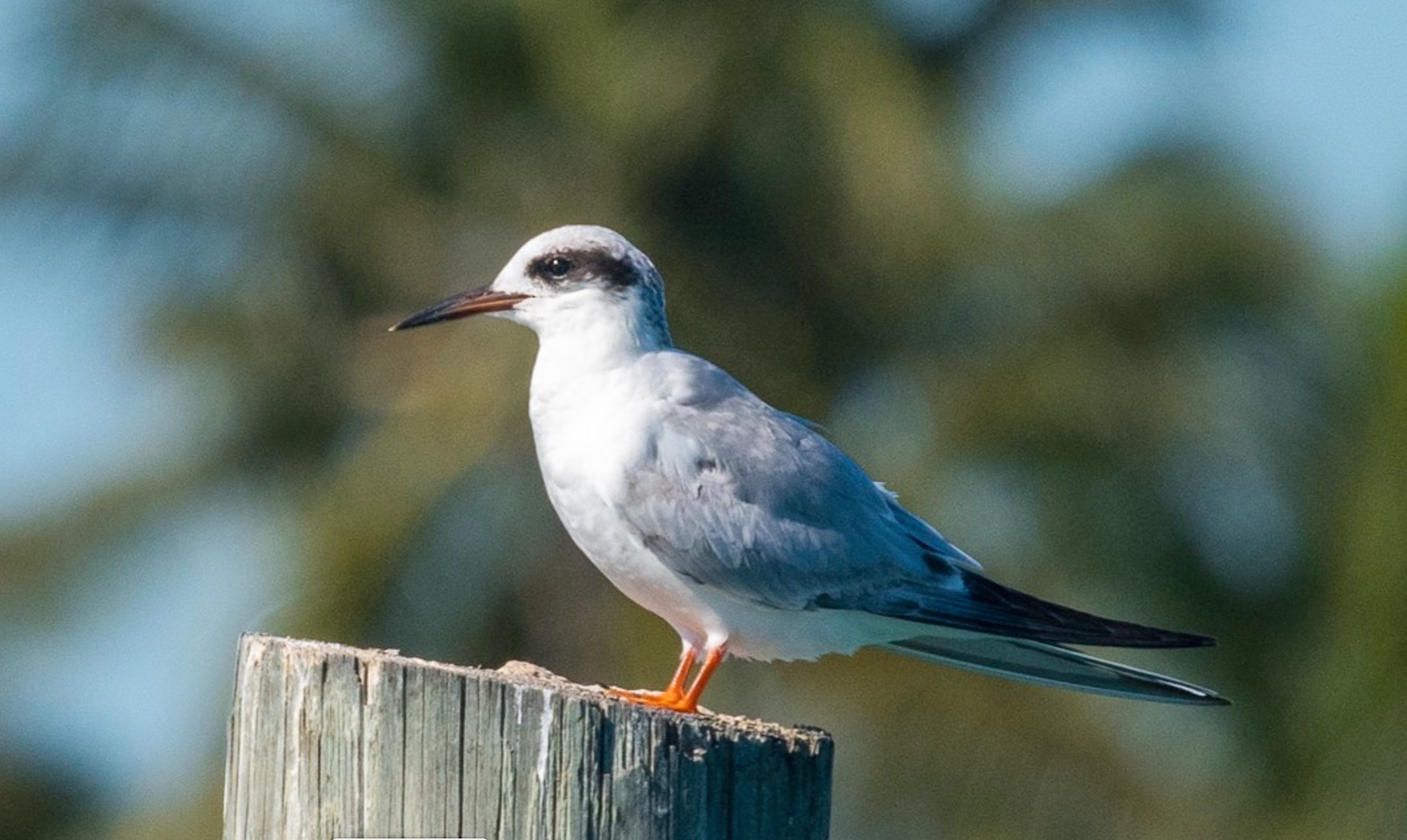
There is one very rare winter resident migratory tern species, with few records of sightings for Bahamas and until early 2019, no photographic record for Abaco until Sally Chisholm saw one at Treasure Cay and managed to capture it for posterity.
FORSTER’S TERN Sterna forsteri WR 4

OCCASIONAL & RARE VISITORS
A further four tern species are very much occasionals that drop by. Three of them pass over the Bahamas on their longer migration, but may make a pit-stop around Abaco to take on fuel. Likelihood of sighting one? Slender but not impossible… the Caspian tern below was photographed on Abaco. The fourth, the Arctic Tern, is a very rare vagrant, a bird well away from its usual home or migration route as the result of storms or faulty satnav or sheer happenstance. Don’t travel to the Bahamas intent on seeing one.
CASPIAN TERN Hydroprogne caspia TR 4


The remaining species are the transient black tern and common tern; and the vanishingly rare vagrant Arctic tern. No photos of any of these I’m afraid. Here’s a handy checklist of all the tern species.

ELECTIVE MUSICAL DIGRESSION

Written by Pete Seeger, Turn x 3 was released in 1965, the title track on the second album by The Byrds. At a rather febrile time in US history (Vietnam, draft riots, civil rightists v cops and so on), this unusually palliative and thoughtful song with its religious connotations to some extent stood for peace and hope in a time of turmoil.
PS the somewhat laboured title of this post shoehorns in the name of another Byrds album, ‘The Notorious Byrd Brothers’
Photo credits: Keith Salvesen (1, 2, 3, 5, 18); Tony Hepburn (4); Alex Hughes (10, 11); Bruce Hallett (6, 7, 12); Woody Bracey (8, 13, 16); Duncan Wright (9); Dick Daniels (14); Sally Chisholm (15); Keith Kemp (17)


Royal terns Thalasseus maximus seem to have a great liking – quite rightly – for the charms of Cherokee, Abaco. Of the 12 tern species recorded for Abaco, ROTEs are the only permanent residents. Most of the others are summer visitors; a couple are winter visitors; and the rest pass through as migrating ‘transients’, stopping to rest and refuel on their long journeys. So ROTEs are undoubtedly the most commonly found terns on Abaco, and some might say the finest. And Cherokee Long Dock is one place to find them.

The historic LONG DOCK at Cherokee stretches far out into the sea to accommodate the varying tide levels of the area – click the link for more information and photos. It is a memorable feature for visitors, and much loved by locals. Also by the royal terns.

The dock provides an ideal safe platform for ROTEs to congregate and hang out. They have a perfect view of the small fishes that make up their diet as they swim in the clear turquoise waters a few feet below.

There are buoys in the bay as well, and individual birds will fly from the dock to perch on a buoy and check out the fishing round it, before returning to the dock – hopefully with a fish in its beak. And the juveniles, with their endearing beginner ‘hair’styles (see #3) can learn the ropes from their elders and betters.

A group of people, especially with a dog, might persuade the birds to take flight, but they return as soon as they can; or simple move along the dock and settle in a different place.

The plaque for the long docK

The dock is so long that it tapers to a vanishing point on the horizon
KNOW YOUR TERNS (WITH THE ADMIRABLE BIRDORABLE)
Abaco has these species plus three more
Credits: Keith Salvesen Photography; BIRDORABLE, with thanks for their wit and amazingly effective highlighting of the essential distinguishing features of bird species
Springboard…

