Category Archives: Uncategorized
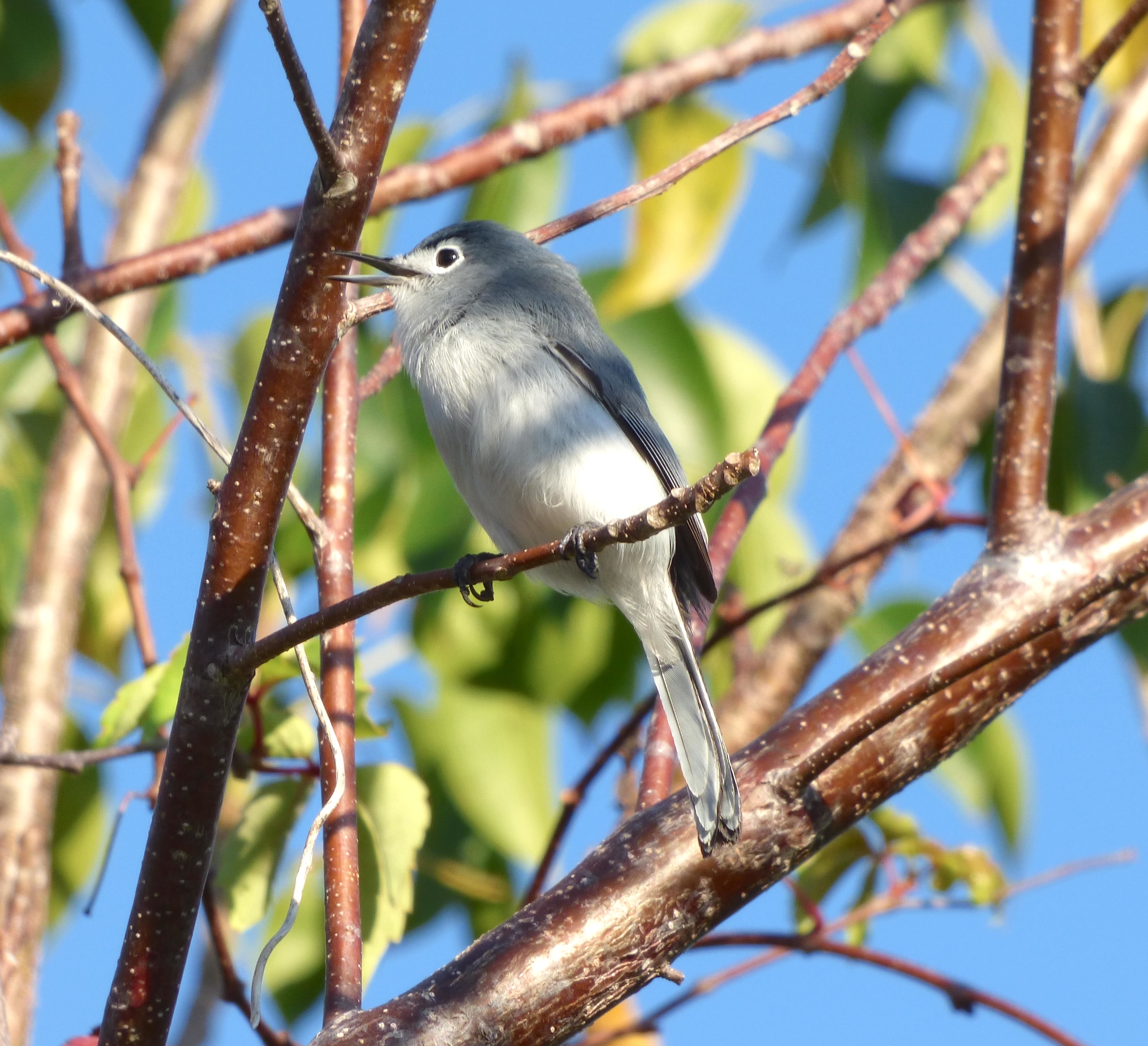
BLUE-GRAY GNATCATCHER . ABACO . BAHAMAS
TERNS: THE 12 SPECIES RECORDED FOR ABACO, BAHAMAS
There are twelve (12!) species of tern – ‘swallows of the sea’ – that to a greater or lesser extent may be found on Abaco. Whether they will actually be visible at any given time is less certain, though. For a start, the only resident species is the lovely Royal Tern, available at many locations on Abaco and the cays throughout the year. Others are migratory or – rarest of all –
ROYAL TERNS Thalasseus maximus PR1
In the slightly less commonly-found category are the summer migrant terns that, by definition, are only in residence for around half the year. Four of these are fairly common in certain areas, and actually breed on Abaco; these include arguably the prettiest of all, the bridled tern. The other two tern species (gull-billed and sandwich) are more rare and as far as I can make out do not breed locally; or perhaps only rarely.
LEAST TERN Sternula antillarum SR B 1
BRIDLED TERN Onychoprion anaethetus SR B 2
ROSEATE TERN Sterna Dougallii SR B 2
SOOTY TERN Onychoprion anaethetus SR B 2
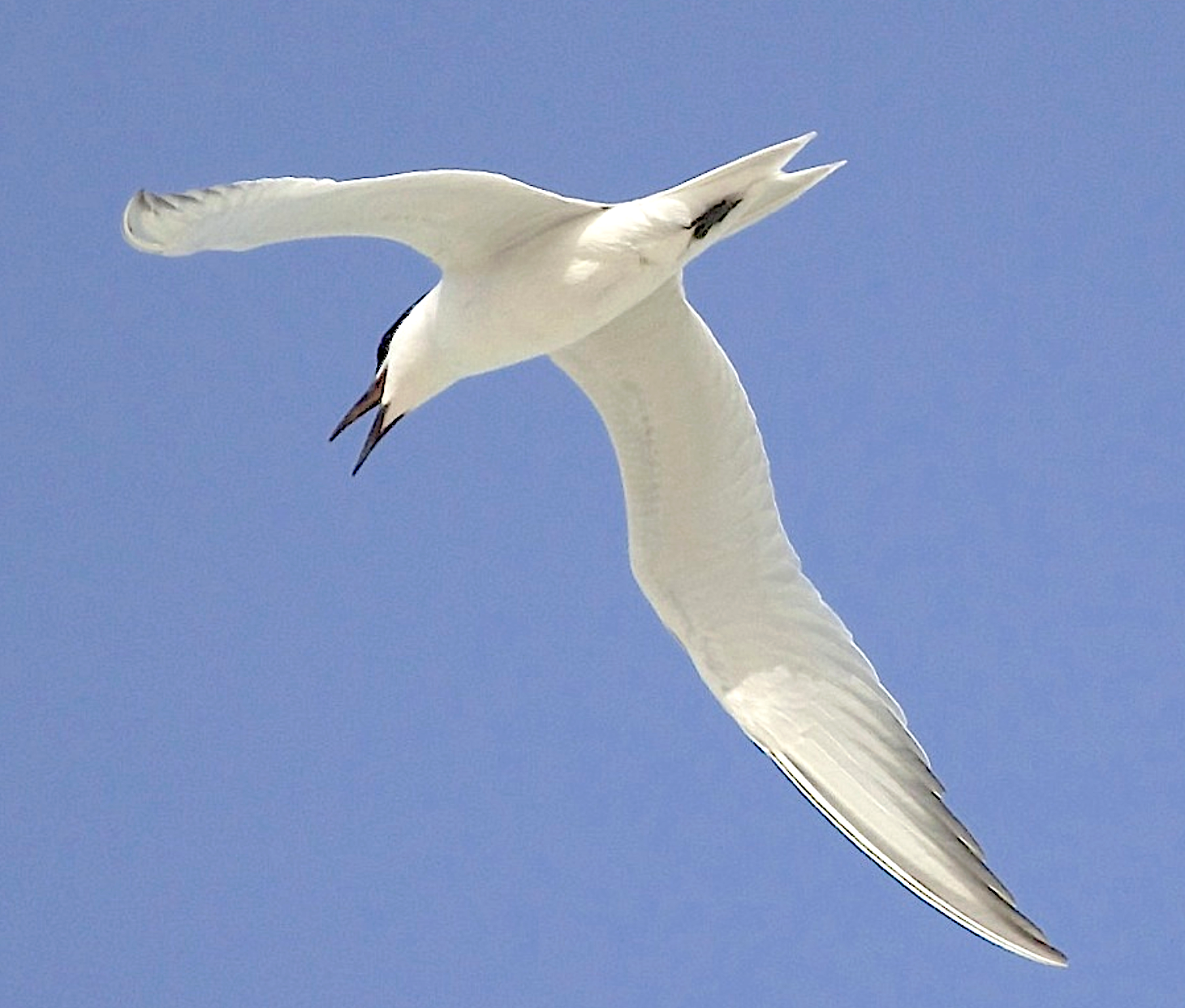
GULL-BILLED TERN Gelochelidon nilotica SR 3
SANDWICH TERN Thalasseus sandvicensis SR 4
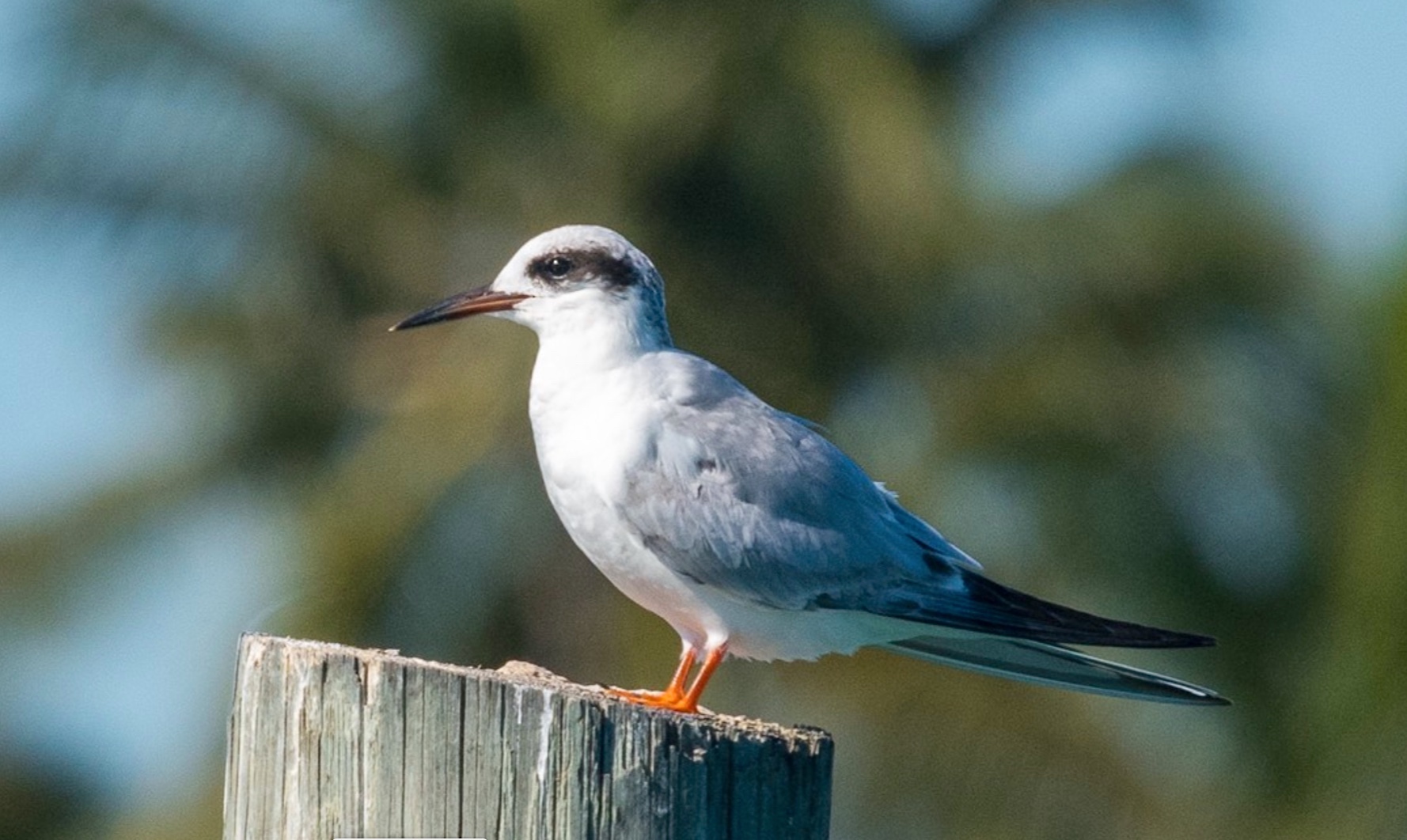
There is one rare winter resident migratory tern species. I had to check when the last one was recorded for Abaco. It was of course only in January this year, when ace birder-photographer Sally Chisholm saw one at Treasure Cay and managed to photograph it for posterity.
FORSTER’S TERN Sterna forsteri WR 4
The final four ‘Abaco’ terns are very much the occasional visitors. Three of them pass over the Bahamas on their longer migration, but may make a pit-stop around Abaco to take on fuel. Likelihood of sighting one? Slender but not impossible… The fourth, the Arctic Tern, is a very rare vagrant, a bird well away from its usual home or migration route as the result of storms or faulty satnav or sheer happenstance. Don’t travel to the Bahamas intent on seeing one.
CASPIAN TERN Hydroprogne caspia TR 4
As for the remaining three species, they are the transient black tern and common tern; and the vanishingly rare vagrant Arctic tern (the clue is in the name). No photos of any of these I’m afraid, so here’s a handy checklist instead.
ELECTIVE MUSICAL DIGRESSION
Written by Peter Seeger a few years earlier, Turn x 3 was released in 1965, the title track on the second album from the Byrds. At a rather febrile time in US history (Vietnam, draft riots, black civil rightists v cops and so on), this unusually palliative and thoughtful song with its religious connotations to some extent stood for peace and hope in a time of turmoil.
PS the somewhat laboured title of this post shoehorns in the name of another Byrds album, ‘The Notorious Byrd Brothers’
Photo credits: Keith Salvesen (1, 2, 3, 5, 18); Tony Hepburn (4); Alex Hughes (10, 11); Bruce Hallett (6, 7, 12); Woody Bracey (8, 13, 16); Duncan Wright (9); Dick Daniels (14); Sally Chisholm (15); Keith Kemp (17)
BROWN PELICANS

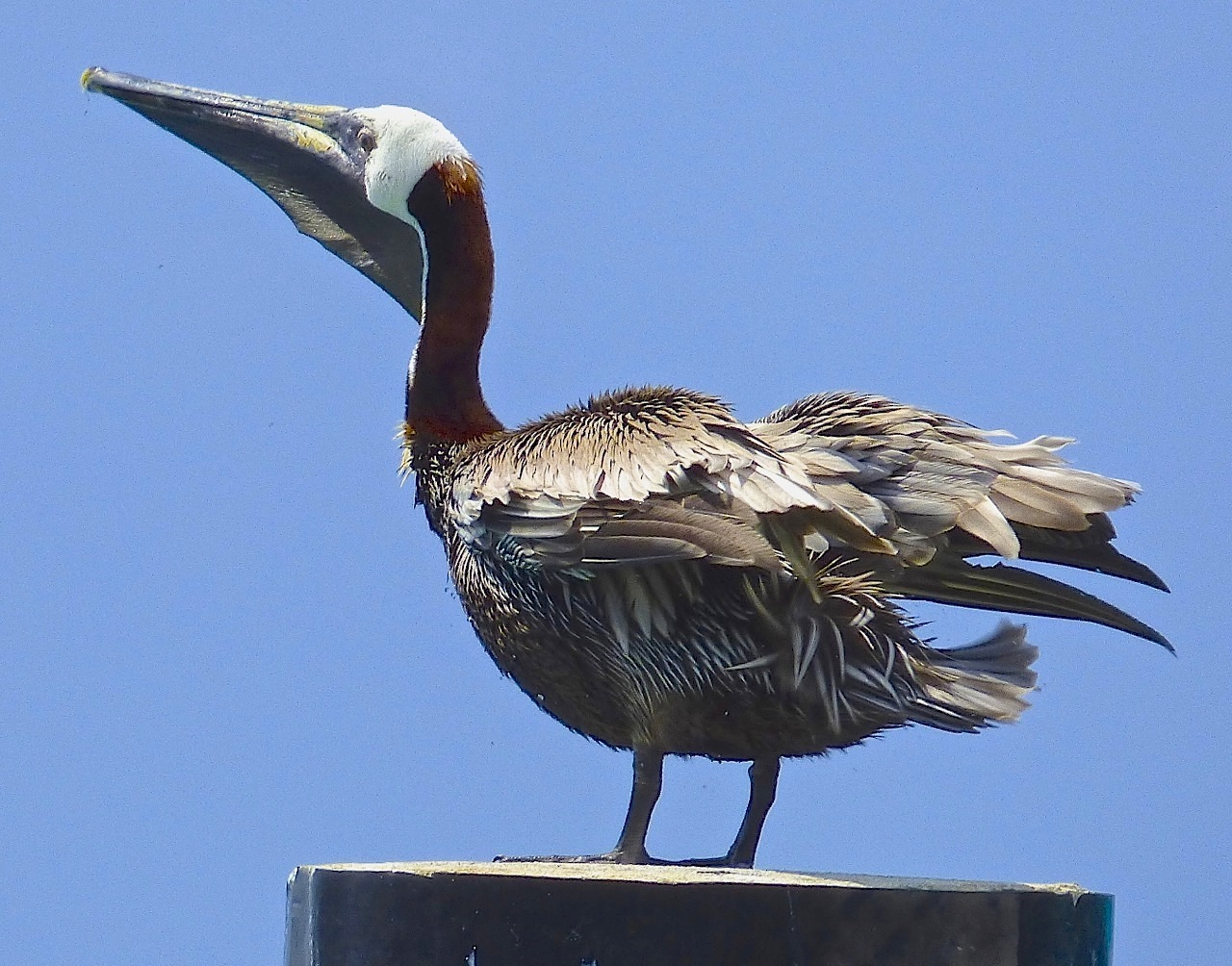
The best location on Abaco for watching brown pelicans is Sandy Point, the home of BMMRO (Bahamas Marine Mammal Research Organisation) and of course the legendary Nancy’s, the restaurant at the end of the road. It is a short step to the docks on which the pelicans gather and use as a launch pad for their fishing expeditions.


I photographed this bird at the end of the SP dock, looking rather bedraggled after a dive
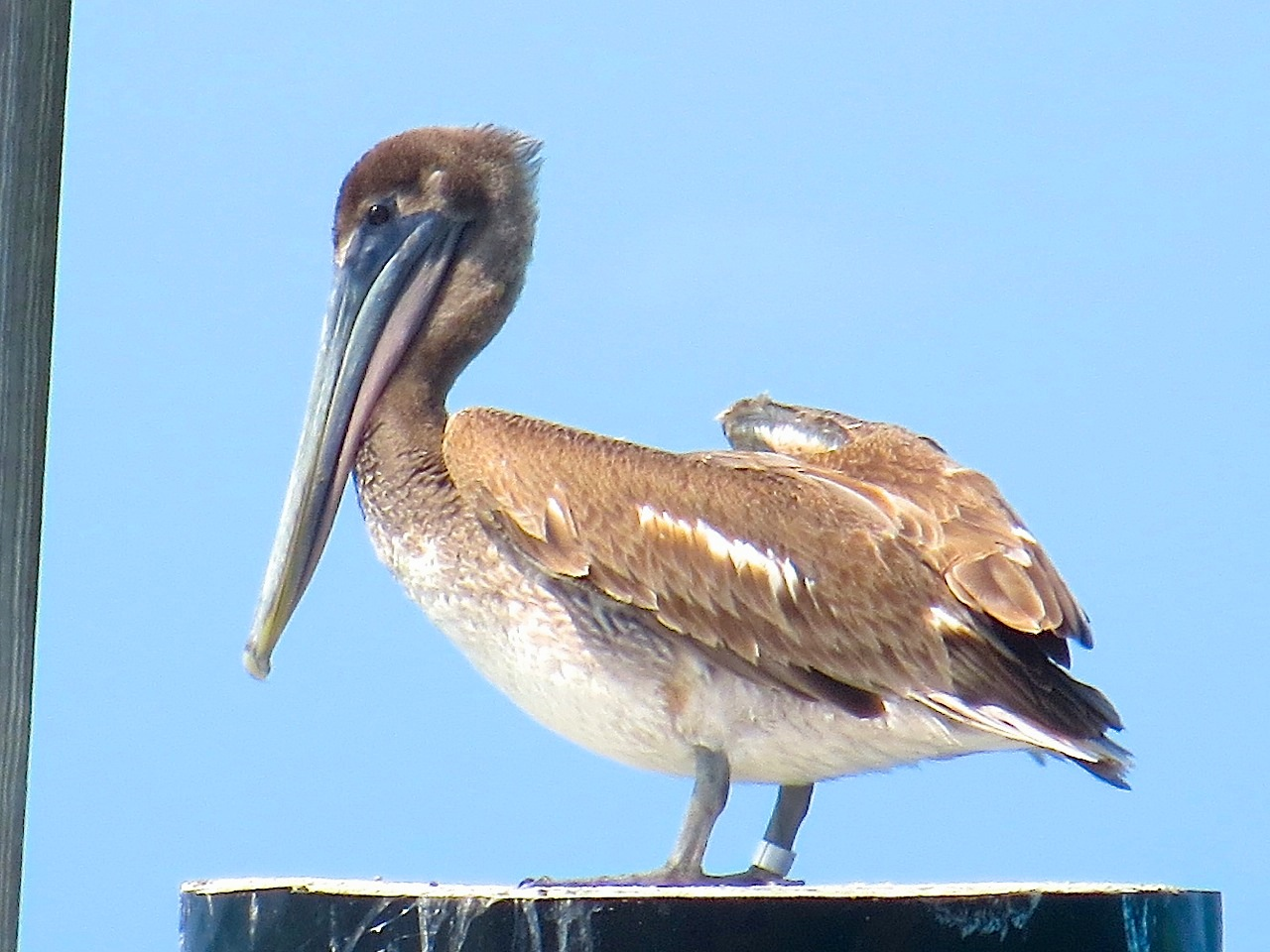
Note the significant plumage differences between the male (above) & this female
The brown pelican is (or has become) quite uncommon in the Bahamas. On Abaco it is a permanent resident breeding species. A drop in numbers equals fewer nests, fewer chicks and… fewer numbers. It’s a classic cycle towards serious population decline and all that is implied.

The pelicans above were all photographed on Abaco. Two were not, but are both by exceptional photographers. One, Phil Lanoue, specialises in dramatic sequences, and his work features elsewhere in this blog. The final image was sportingly uploaded by Alan Schmierer from Flickr into the ‘public domain’.

Credits: Tom Sheley (1); Tony Hepburn (2); Keith Salvesen (3, 4, 6); Woody Bracey (5); Phil Lanoue (7); Alan Schmierer (8); Birdorable (cartoon)
SEXING THE HUMMER’: A GENDER GUIDE TO ABACO’S HUMMINGBIRDS
SEXING THE HUMMER
A GENDER GUIDE TO ABACO’S HUMMINGBIRDS
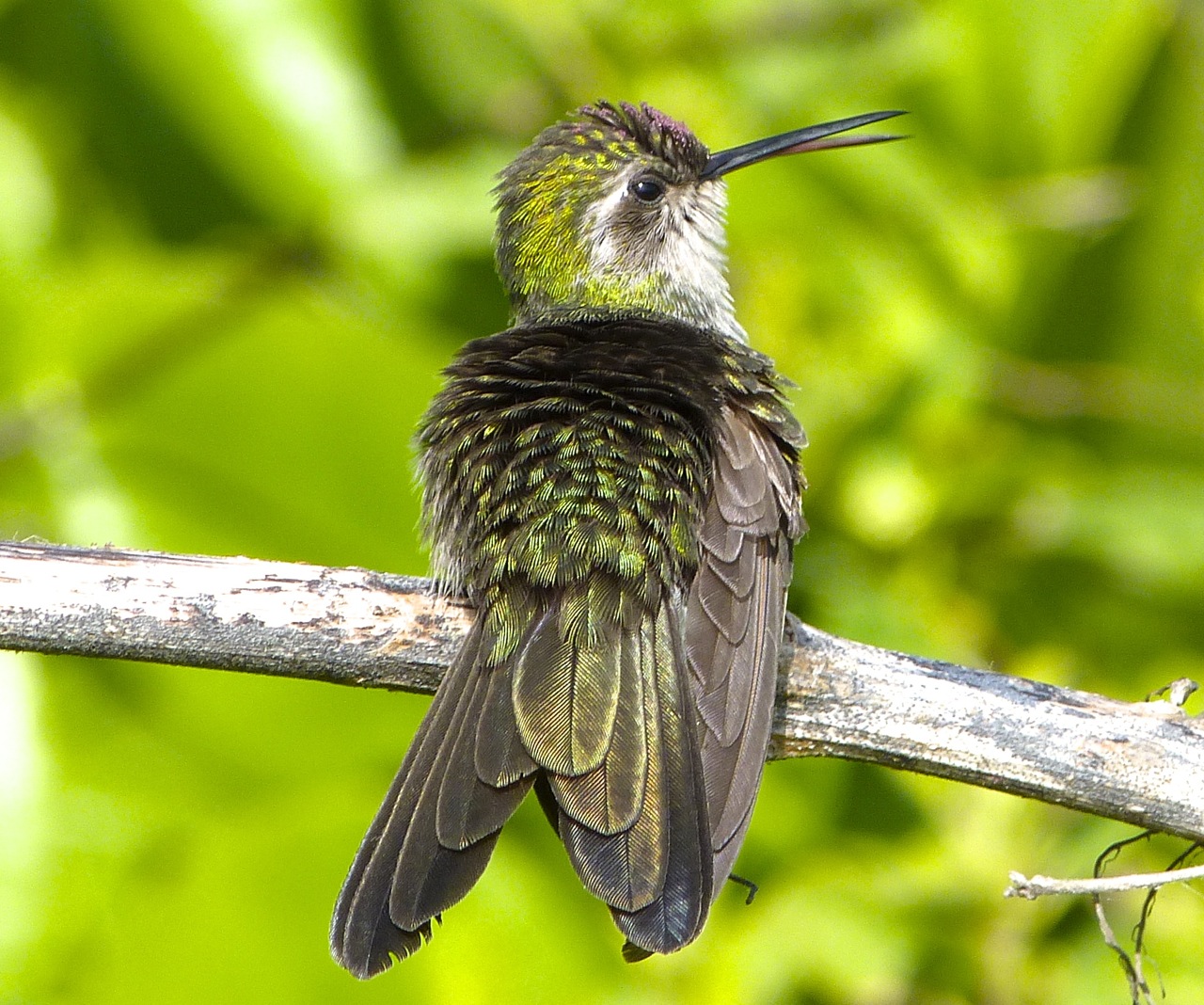
The subject matter of this post is not as indelicate as the title might imply; nor is it a ‘hands-on’ practical guide for intimate examinations of tiny birds. In particular it does not publicise some recently discovered louche activity involving unfeasibly large motor vehicles. It’s all about plumage and recognition. And there are only two species – and two genders for each one – to wrestle with. So here are the adult male and female Bahama Woodstars and Cuban Emeralds in all their glory…
BAHAMA WOODSTAR (Calliphlox evelynae)

CUBAN EMERALD (Chlorostilbon ricordii)


And finally, a brilliant Woodstar photo taken by Tom Sheley, birdman and generous fishing partner, that spans the boundary between wildlife photography and art.
Header Image: Keith Salvesen
WORLD SHOREBIRDS DAY . COMPLETE CHECKLIST FOR ABACO, BAHAMAS
WORLD SHOREBIRDS DAY: ABACO’S COMPLETE CHECKLIST
Abaco’s birding records compiled for over 20 years include 33 shorebird species. For a few, the islands and cays are a permanent residence; for many others they are winter quarters; some species are visitors transient in their migrations; a few are rare vagrants. The complete checklist of Abaco’s shorebirds is below, along with 3 links to specific posts.
I have divided the species into 3 categories: sandpipers & kin; plovers; and a catch-all ‘large shorebird’ group that includes one or two sandpipers. Of the 26 birds featured and shown in the main checklist below, 23 are ones you might reasonably hope or expect to encounter on Abaco, though some only if you are lucky or your field-craft is excellent. The others are the long-billed dowitcher, American avocet and Wilson’s phalarope (of which only one has ever been seen on Abaco, with a photo to prove it). Many of these are showcased in my book The Birds of Abaco.
CLICK A LINK TO INVESTIGATE
THE COMPLETE CHECKLIST
The codes tell you, for any particular bird, when you may see it (P = permanent, WR = winter resident, TR = transient, V = vagrant); whether it breeds (B) on Abaco; and your chance of seeing it, graded from easy (1) to vanishingly unlikely (5).
- Black-necked Stilt Himantopus mexicanus PR B 3
- American Avocet Recurvirostra americana WR 4
- American Oystercatcher Haematopus palliatus PR B 2
- Black-bellied Plover Pluvialis squatarola WR 1
- American Golden-Plover Pluvialis dominica TR 4
- Wilson’s Plover Ochthodromus wilsonia PR B 2
- Semipalmated Plover Charadrius semipalmatus WR 2
- Piping Plover Charadrius melodus WR 3
- Killdeer Charadrius vociferus WR 2
- Spotted Sandpiper Actitis macularius WR 1
- Solitary Sandpiper Tringa solitaria WR 2
- Greater Yellowlegs Tringa melanoleuca WR 2
- Willet Tringa semipalmata PR B 2
- Lesser Yellowlegs Tringa flavipes WR 3
- Ruddy Turnstone Arenaria interpres PR 2
- Red Knot Calidris canutus WR 3
- Sanderling Calidris alba WR 1
- Dunlin Calidris alpina WR 2
- Least Sandpiper Calidris minutilla WR 2
- White-rumped Sandpiper Calidris fuscicollis TR 3
- Semipalmated Sandpiper Calidris pusilla TR 2
- Western Sandpiper Calidris Mauri TR 2
- Short-billed Dowitcher Limnodromus griseus WR 1
- Long-billed Dowitcher Limnodromus scolopaceus WR 4
- Wilson’s Snipe Gallinago delicata WR 3
- Wilson’s Phalarope Phalaropus tricolor V 4
For the sake of completeness, the other 7 species of shorebird recorded for Abaco – all transients or vagrants – are:
- Upland Sandpiper Bartramia longicauda TR 4
- Whimbrel Numenius phaeopus TR 4
- Hudsonian Godwit Limosa haemastica V5
- Marbled Godwit Limosa fedoa V5
- Buff-breasted Sandpiper Tryngites subruficollis V5
- Pectoral Sandpiper Calidris melanotos TR 3
- Stilt Sandpiper Calidris himantopus TR 3
Photo Credits: Tom Sheley, Bruce Hallett, Keith Salvesen
BROWN PELICANS

The best location on Abaco for watching brown pelicans is Sandy Point, the home of BMMRO (Bahamas Marine Mammal Research Organisation) and of course the legendary Nancy’s, the restaurant at the end of the road. It is a short step to the docks on which the pelicans gather and use as a launch pad for their fishing expeditions.


I photographed this bird at the end of the SP dock, looking rather bedraggled after a dive

Note the significant plumage differences between the male (above) & this female
The brown pelican is (or has become) quite uncommon in the Bahamas. On Abaco it is a permanent resident breeding species. A drop in numbers equals fewer nests, fewer chicks and… fewer numbers. It’s a classic cycle towards serious population decline and all that is implied.

The pelicans above were all photographed on Abaco. Two were not, but are both by exceptional photographers. One, Phil Lanoue, specialises in dramatic sequences, and his work features elsewhere in this blog. The final image was sportingly uploaded by Alan Schmierer from Flickr into the ‘public domain’.

Credits: Tom Sheley (1); Tony Hepburn (2); Keith Salvesen (3, 4, 6); Woody Bracey (5); Phil Lanoue (7); Alan Schmierer (8); Birdorable (cartoon)
WORLD SHOREBIRDS DAY . COMPLETE CHECKLIST FOR ABACO, BAHAMAS
WORLD SHOREBIRDS DAY: ABACO’S COMPLETE CHECKLIST
Abaco’s birding records compiled for over 20 years include 33 shorebird species. For a few, the islands and cays are a permanent residence; for many others they are winter quarters; some species are visitors transient in their migrations; a few are rare vagrants. The complete checklist of Abaco’s shorebirds is below, along with 3 links to specific posts.
I have divided the species into 3 categories: sandpipers & kin; plovers; and a catch-all ‘large shorebird’ group that includes one or two sandpipers. Of the 26 birds featured and shown in the main checklist below, 23 are ones you might reasonably hope or expect to encounter on Abaco, though some only if you are lucky or your field-craft is excellent. The others are the long-billed dowitcher, American avocet and Wilson’s phalarope (of which only one has ever been seen on Abaco, with a photo to prove it). Many of these are showcased in my book The Birds of Abaco.
CLICK A LINK TO INVESTIGATE
THE COMPLETE CHECKLIST
The codes tell you, for any particular bird, when you may see it (P = permanent, WR = winter resident, TR = transient, V = vagrant); whether it breeds (B) on Abaco; and your chance of seeing it, graded from easy (1) to vanishingly unlikely (5).
- Black-necked Stilt Himantopus mexicanus PR B 3
- American Avocet Recurvirostra americana WR 4
- American Oystercatcher Haematopus palliatus PR B 2
- Black-bellied Plover Pluvialis squatarola WR 1
- American Golden-Plover Pluvialis dominica TR 4
- Wilson’s Plover Ochthodromus wilsonia PR B 2
- Semipalmated Plover Charadrius semipalmatus WR 2
- Piping Plover Charadrius melodus WR 3
- Killdeer Charadrius vociferus WR 2
- Spotted Sandpiper Actitis macularius WR 1
- Solitary Sandpiper Tringa solitaria WR 2
- Greater Yellowlegs Tringa melanoleuca WR 2
- Willet Tringa semipalmata PR B 2
- Lesser Yellowlegs Tringa flavipes WR 3
- Ruddy Turnstone Arenaria interpres PR 2
- Red Knot Calidris canutus WR 3
- Sanderling Calidris alba WR 1
- Dunlin Calidris alpina WR 2
- Least Sandpiper Calidris minutilla WR 2
- White-rumped Sandpiper Calidris fuscicollis TR 3
- Semipalmated Sandpiper Calidris pusilla TR 2
- Western Sandpiper Calidris Mauri TR 2
- Short-billed Dowitcher Limnodromus griseus WR 1
- Long-billed Dowitcher Limnodromus scolopaceus WR 4
- Wilson’s Snipe Gallinago delicata WR 3
- Wilson’s Phalarope Phalaropus tricolor V 4
For the sake of completeness, the other 7 species of shorebird recorded for Abaco – all transients or vagrants – are:
- Upland Sandpiper Bartramia longicauda TR 4
- Whimbrel Numenius phaeopus TR 4
- Hudsonian Godwit Limosa haemastica V5
- Marbled Godwit Limosa fedoa V5
- Buff-breasted Sandpiper Tryngites subruficollis V5
- Pectoral Sandpiper Calidris melanotos TR 3
- Stilt Sandpiper Calidris himantopus TR 3
Photo Credits: Tom Sheley, Bruce Hallett, Keith Salvesen
SEXING THE HUMMER’: A GENDER GUIDE TO ABACO’S HUMMINGBIRDS
‘SEXING THE HUMMER’
A GENDER GUIDE TO ABACO’S HUMMINGBIRDS
The drastic effects of Hurricane Dorian on Abaco’s birdlife continue, with recent reports suggesting that all species remain affected, and some severely so. However there are signs of a slow improvement, and this good news includes the two hummingbird species, the endemic Bahama Woodstar and the Cuban Emerald. A couple of recent posts on FB indicate that sightings of both these species have been a very welcome surprise. So, a good time to write about them and to show their beauty.
The subject matter of this post is not as indelicate as the title might imply; nor is it a ‘hands-on’ practical guide for intimate examinations of tiny birds. In particular it does not publicise some recently discovered louche activity involving unfeasibly large motor vehicles. It’s all about plumage and recognition. And there are only two species – and two genders for each one – to wrestle with. So here are the adult male and female Bahama Woodstars and Cuban Emeralds in all their glory…
BAHAMA WOODSTAR (Calliphlox evelynae)

CUBAN EMERALD (Chlorostilbon ricordii)


And finally, a brilliant Woodstar photo taken by Tom Sheley, birdman and generous fishing partner, that I spans the boundary between wildlife photography and art.
Header Image: Keith Salvesen
FIVE STARS: BAHAMAS ENDEMIC BIRDS (FOUR FROM ABACO)

FIVE STARS: BAHAMAS ENDEMIC BIRDS (FOUR FROM ABACO)
It’s December 2020, and Caribbean endemic birds are, deservedly, being given more time in the sun. Right now they are being featured by BNT (Bahamas National Trust); BirdsCaribbean; and (in an excellent Zoom presentation) the august Linnean Society in Burlington House, London. So I am chiming in with slightly updated post on the topic, a reminder both of the beauty of the endemics and of their struggle for survival.
ABACO is fortunate to be home to 4 of the 5 endemic Bahamas species. The fifth, the beautiful BAHAMA ORIOLE Icterus northropi, was found on both Abaco and Andros until the 1990s, when it sadly became extirpated from Abaco. Now found only on Andros, until quite recently there were thought to be fewer than 300 Orioles left – a barely sustainable number. The species is unsurprisingly IUCN listed as critically endangered. However, there are signs that an intensive conservation program is working, with an increase in individuals and some new local populations found. Here’s a picture of one as a reminder of what Abaco is now missing…
Abaco’s four endemic species are the tiny Bahama Woodstar hummingbird, the Bahama Yellowthroat, the Bahama Warbler (since 2011), and the Bahama Swallow. All are of course permanent breeding residents on Abaco and its outer Cays. None is exclusive to Abaco; all are relatively plentiful. The Woodstar is perhaps the hardest to find, not least because it competes territorially with the Cuban Emerald hummingbird. Here are some striking images of these four endemic bird species taken from the archives for (and starring in) ‘The Birds of Abaco’, published in 2014.
BAHAMA WOODSTAR Calliphlox evelynae
BAHAMA YELLOWTHROAT Geothlypis rostrata
BAHAMA WARBLER Setophaga flavescens
BAHAMA SWALLOW Tachycineta cyaneoviridis
‘The Birds of Abaco’ was published in a limited edition in 2014. Many additional copies were donated to all the schools and relevant education departments on Abaco; and to the local Bahamian conservation organisations. This tied in with the excellent policy of teaching children from a very early age the value of the natural world around them, the importance of its ecology, and the need for its conservation. The cover bird for the book was easy to choose – it just had to be a male Woodstar in all his glory with his splendid purple ‘gorget’.
Image credits as shown; otherwise, ‘cover bird’ by Tom Sheley, Bahama Oriole, Daniel Belasco